EN
EN RU
RU ES
ESSurface inspection checks for cracks, burrs, rust, and coating uniformity. A clean and smooth surface improves corrosion resistance and ensures better fitting with lifting systems, reducing risks during installation and long-term use.


1. CE & ISO 9001 Certification
Manufactured under ISO 9001 management with CE certification, ensuring consistent quality, traceability, and compliance with international lifting safety requirements.
2. 3 Times Safety Factor
Designed with a safety factor of at least three, offering more secure lifting performance and reducing risks during precast concrete handling operations.
3. Save More Money
Optimized production through integrated factories and stable raw material supply reduces overall procurement cost while maintaining dependable product performance.
4. Faster Delivery
Efficient scheduling, in-house logistics, and coordinated supply chain shorten production cycles and ensure faster delivery for ongoing and urgent projects.
2.5 Ton Lifting Eye Anchors are designed for safe and efficient handling of precast concrete elements. HULK Metal combines forging, machining, and strict inspection to ensure consistent performance. With stable raw material partners, experienced factories, and coordinated logistics, we support large-volume orders with reliable quality, shorter lead times, and technical assistance tailored to project requirements.
HULK Metal has extensive experience producing lifting anchors for global construction projects, supported by specialized forging and machining factories. Every batch is manufactured using controlled materials such as 20Mn2 and Q345D, with strict dimensional and load testing. Compared with typical suppliers, our process control is more consistent, ensuring each anchor meets required safety factors, surface treatments, and certification standards while maintaining stable supply capability.
Name | 2.5 Ton Lifting Eye Anchors | |||
Drawings | 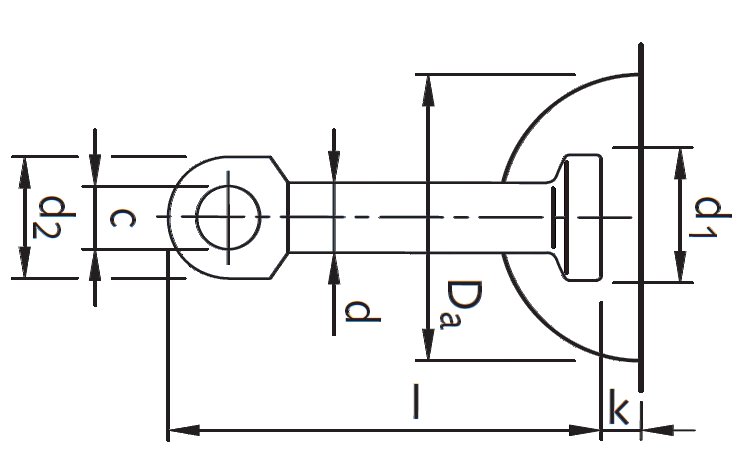 | |||
Material | 20Mn2 / Q345D / CM490 / Stainless Steel / Customizable | |||
Surface | Raw Black / Electro-galvanized / Hot-dip Galvanized | |||
Safety Factor | ≥ 3 | |||
Certification | ISO9001 / CE | |||
SWL (tons) | CODE | LENGTH(mm) | D(mm) | WEIGHT(kg/pc) |
2.5 | HM-E-025090 | 90 | 14 | 0.17 |
- | HM-E-025120 | 120 | 14 | 0.21 |
This section explains everything about 2.5 Ton Lifting Eye Anchors, from definition, structure, working principle, surface treatment, key parameters, applications, manufacturing process, cost calculation, supplier selection, FAQ, to why HULK Metal can supply CE certified products. It is important for buyers who want to choose safe and reliable lifting solutions. Please read carefully to understand how quality, cost, and performance are controlled in real production.
2.5 Ton Lifting Eye Anchors, also known as lifting anchors or spherical head lifting anchors, are essential components used in the handling and transportation of precast concrete elements. With a rated load capacity of 2.5 tons, they are widely applied in wall panels, beams, slabs, and other structural units where safe lifting is required throughout production, storage, and installation stages.
Compared with conventional lifting methods, these lifting anchors provide a more secure and standardized connection point. The spherical head design allows fast engagement with lifting clutches, improving efficiency on construction sites while reducing manual adjustment time. This makes them especially suitable for projects where repetitive lifting and strict timelines are involved.
At HULK Metal, each 2.5 Ton Lifting Eye Anchor is manufactured through controlled forging and machining processes, ensuring uniform structure and reliable mechanical performance. Before shipment, samples from every batch undergo destructive tensile testing at three times the rated load. This testing method provides stronger assurance compared with basic inspection approaches, helping ensure that every delivered batch performs consistently under real working conditions.
With stable material sourcing, strict quality control, and coordinated production, these lifting anchors are supplied to meet demanding project requirements while maintaining consistent quality across large-volume orders.
Forged from a single high-performance alloy steel bar, the lifting eye anchor features an integrated structure. It can be divided into three functional parts: head, pin, and tail.
The head is formed into a spherical shape with a flat top surface, designed for quick and secure connection with a lifting clutch. Clear markings indicating load capacity and length are forged directly onto the top, ensuring easy identification during use. Compared with stamped markings, forged identification remains more durable and readable even after repeated lifting operations.
The pin connects the spherical head to the tail section, acting as the main load transfer component. During lifting, it transmits forces from the clutch-connected head down to the embedded portion inside the concrete element. Manufactured through controlled forging, the pin offers more consistent strength and better resistance to deformation compared with welded or assembled alternatives.
The tail is forged into a flat ring structure, providing a reliable anchoring point within the precast concrete. Reinforcement bars can pass through the ring, increasing resistance and distributing loads more evenly throughout the concrete element. This design offers stronger bonding and more stable load distribution compared with simpler anchoring shapes, improving overall lifting safety.
The lifting eye anchor works through secure embedding and mechanical engagement, enabling safe load transfer from precast concrete elements to lifting equipment during installation and handling operations.
During installation, the 2.5 Ton Lifting Eye Anchor is positioned accurately using a Recess Former, which fixes the anchor at the required location on the steel mold. This ensures consistent alignment and correct exposure of the spherical head after casting. Reinforcement bars are then threaded through the tail ring, creating a stronger mechanical bond between the anchor and the surrounding concrete.
Once the setup is complete, concrete is poured into the mold, fully encapsulating the tail section. Compared with surface-mounted lifting points, this embedded method provides more stable load distribution and reduces the risk of localized stress concentration. After the concrete has cured and reached sufficient strength, the recess former is removed, leaving a clean recess that allows easy access to the anchor head for lifting operations.
For lifting operations, the exposed spherical head is connected to a Lifting Clutch, which locks securely around the head to form a reliable connection point. This connection method is faster and more consistent compared with traditional hooks or improvised lifting solutions. Once engaged, the lifting clutch transfers the load evenly through the anchor system.
A crane or lifting machine is then used to hoist the precast concrete element into position. During this process, the load is transmitted from the clutch to the head, through the pin, and into the embedded tail, ensuring balanced force distribution within the concrete structure. This integrated load path provides greater lifting stability and minimizes the risk of sudden failure, making it suitable for repeated use across demanding construction projects.
Different surface treatments affect corrosion resistance, cost, and application suitability. HULK Metal provides electro-galvanized, hot dip galvanized, and raw black lifting anchors to match various project environments.
Electric galvanized lifting anchors are coated through an electroplating process that forms a thin and uniform zinc layer on the surface. This treatment provides a cleaner and smoother appearance, making it more suitable for projects where dimensional precision and visual consistency are important. Compared with thicker coatings, electro-galvanizing has less impact on thread tolerance and fitting accuracy.
From a cost perspective, it is more economical than hot dip galvanizing, making it a practical choice for indoor or controlled environments where exposure to moisture is limited. However, its corrosion resistance is moderate rather than extreme. In outdoor or highly humid conditions, the protective layer may wear faster over time. For projects prioritizing balance between cost and basic corrosion protection, this option performs more efficiently.
Hot dip galvanized lifting anchors are coated by immersing the product into molten zinc, forming a thicker and more robust protective layer. This process creates a stronger barrier against corrosion, making it more suitable for outdoor construction, marine environments, or projects exposed to rain and humidity. Compared with electro-galvanized finishes, the coating adheres more firmly and lasts longer under harsh conditions.
This increased durability comes with a slightly higher cost and a rougher surface finish. The thicker coating may also cause minor dimensional variation, which needs to be considered in applications requiring tight tolerances. Even so, for projects where long-term performance and reduced maintenance are more important than initial cost, hot dip galvanizing provides a more reliable solution.
Raw black lifting anchors receive no metallic coating; instead, their surface is only treated with anti-rust oil to reduce oxidation during storage and transportation. This option preserves the original material properties without adding coating thickness, ensuring full dimensional accuracy and compatibility with precise molds or assemblies. Compared with coated alternatives, it is the most cost-effective option.
However, its resistance to corrosion is limited, making it more suitable for indoor use or applications where the anchors will be embedded in concrete shortly after delivery. If exposed to moisture or outdoor environments for extended periods, additional protection may be required. For projects that prioritize cost efficiency and fast turnover rather than long-term exposure resistance, raw black anchors remain a practical and flexible choice.
Key parameters determine lifting safety and performance. Selecting proper length, safe working load, and pin thickness ensures reliable embedding, stable load transfer, and compliance with project requirements.
The length of a 2.5 Ton Lifting Eye Anchor directly affects how deeply the anchor is embedded into the precast concrete element. A properly selected length ensures that the load is transferred effectively from the anchor into the surrounding concrete mass. If the length is insufficient, the anchoring force becomes weaker, increasing the risk of pull-out under load.
In practice, the required length should match the thickness and structural design of the precast concrete element. This selection is typically determined by the project’s design engineer, who considers factors such as concrete strength, reinforcement layout, and lifting angle. Compared with standardized selections, project-specific length matching provides more reliable performance. Choosing the correct length is essential to achieving stable lifting and reducing structural stress concentration.
Safe Working Load (SWL) is the core parameter of any lifting anchor, defining the maximum load that can be safely handled during lifting operations. For 2.5 Ton Lifting Eye Anchors, the rated capacity is 2.5 tons under specified conditions. This value is determined based on controlled testing and includes a safety factor, ensuring that actual performance exceeds working requirements.
Selecting the correct SWL is critical because it directly impacts lifting safety. Using an anchor with insufficient capacity may lead to deformation or failure, while over-specification may increase unnecessary costs. Engineers must evaluate the total weight of the precast concrete element, lifting angles, and dynamic forces during handling. Compared with rough estimations, accurate SWL selection provides more predictable lifting performance and reduces operational risks on site.
The thickness of the pin, commonly referred to as diameter (D), plays a crucial role in determining the mechanical strength of the lifting anchor. It is the main section that transfers load from the spherical head to the embedded tail, making it highly sensitive to stress concentration during lifting. A thicker pin generally provides greater resistance to bending and shear forces.
However, selecting the appropriate pin thickness is not only about increasing size. It must align with the overall anchor design, including length and material grade, to ensure balanced performance. Oversized pins may complicate installation or interfere with reinforcement placement, while undersized pins reduce load-bearing capacity. Compared with inconsistent manufacturing, precisely controlled pin dimensions ensure stable performance across batches and help maintain reliable lifting safety in demanding applications.
Lifting Eye Anchors are embedded in various precast concrete elements, providing secure lifting points. Proper positioning improves balance, reduces handling risk, and ensures more efficient installation on construction sites.
In precast concrete wall panels, lifting eye anchors are typically embedded near the top edge, symmetrically positioned to maintain balance during lifting. This placement allows the panel to remain stable while being hoisted vertically, reducing the risk of tilting or rotation. For larger panels, multiple anchors may be used to distribute the load more evenly.
Compared with random positioning, carefully designed anchor placement ensures smoother handling and minimizes stress on both the concrete and lifting equipment. Engineers usually consider panel dimensions, weight distribution, and lifting angles when determining the exact locations. Proper embedding not only improves lifting safety but also speeds up installation once the panels arrive on site.
For precast concrete beams, lifting eye anchors are commonly installed along the top surface, positioned at calculated intervals from each end. This arrangement helps maintain a horizontal orientation during lifting, which is critical for long or heavy beams. Incorrect positioning can lead to uneven stress distribution, causing bending or instability during handling.
Compared with single-point lifting, using two or more anchors ensures better load sharing and control. The anchor locations are usually determined based on beam length, reinforcement design, and expected lifting method. By embedding anchors at optimized points, contractors can achieve more controlled lifting operations, reducing the risk of structural damage and improving efficiency during installation.
In precast concrete slabs, lifting eye anchors are generally embedded on the top surface, often near the corners or along the edges. This positioning allows the slab to be lifted evenly, preventing warping or cracking caused by uneven force distribution. For larger slabs, additional anchors may be required to maintain stability during lifting and placement.
Compared with centrally located lifting points, edge or corner positioning provides better control over slab orientation. Engineers determine the exact placement based on slab size, thickness, and reinforcement layout. Proper anchor positioning ensures that the slab remains level throughout the lifting process, improving safety and making final installation more efficient.
Precast concrete columns require lifting eye anchors to be embedded near the top section, aligned with the column’s central axis. This placement ensures that the column can be lifted in a vertical orientation, which is essential for accurate positioning during installation. If anchors are placed incorrectly, the column may tilt, making alignment more difficult and increasing handling risks.
Compared with off-center lifting points, centrally aligned anchors provide more stable load transfer and reduce stress concentration. Engineers also consider the column height and weight when determining the number and location of anchors. Proper positioning helps achieve smoother lifting operations and ensures that the column can be placed precisely with minimal adjustment on site.
For precast concrete stairs, lifting eye anchors are usually embedded along the upper surface or at structurally strong points within the stair body. Their placement must account for the irregular shape and uneven weight distribution of stair units. Typically, anchors are positioned to maintain balance while preventing rotation during lifting.
Compared with standard flat elements, stair components require more careful planning of anchor locations. Engineers evaluate the center of gravity and reinforcement structure to determine optimal positions. Proper embedding ensures that the stairs can be lifted safely without twisting or excessive stress, improving handling efficiency and reducing the risk of damage during transportation and installation.
Many procurement risks come from unclear specifications, weak process control, or unreliable suppliers. Issues such as inconsistent quality, delayed delivery, or missing certifications often originate from shortcuts taken during production, inspection, or order management.
Low pricing is often achieved by reducing material grade, simplifying forging processes, or skipping critical inspections. Some suppliers may replace specified alloy steel with lower-cost alternatives or reduce heat treatment steps, resulting in inconsistent strength and reduced durability. While the initial quotation appears competitive, the long-term risk is significantly higher.
An experienced factory avoids these risks through transparent material sourcing and controlled production. Buyers should request material certificates, confirm manufacturing processes such as forging and heat treatment, and verify whether destructive testing is performed. Compared with price-focused decisions, evaluating total reliability provides better cost control. Reliable suppliers maintain stable quality across batches, ensuring that each order meets both performance and safety expectations.
Some suppliers provide high-quality samples but switch to less controlled production during mass manufacturing. This often happens when factories lack standardized process control or outsource production without strict supervision. As a result, dimensional accuracy, surface treatment, or even material performance may differ from the approved sample.
To avoid this issue, buyers should work with factories that maintain consistent production workflows from sampling to mass production. It is important to confirm whether the same factory handles both stages and whether process documentation is maintained. Pre-shipment inspections and batch traceability are also essential. Compared with suppliers who rely on manual adjustments, factories with standardized procedures ensure that delivered products remain consistent with approved samples.
Delivery delays are often caused by weak production planning, unstable raw material supply, or lack of coordination between different processing stages. Some suppliers accept orders beyond their actual capacity, leading to scheduling conflicts and missed deadlines. This can disrupt project timelines and increase overall costs.
A reliable factory manages production through coordinated scheduling, stable supplier partnerships, and in-house logistics support. Buyers should confirm whether the supplier has dedicated production lines, clear capacity planning, and contingency measures for urgent orders. Compared with fragmented supply chains, integrated operations ensure more predictable lead times. Choosing a supplier with proven delivery performance helps maintain project schedules and reduces operational uncertainty.
Insufficient load capacity usually results from poor material selection, improper forging, or lack of mechanical testing. Some suppliers may skip tensile testing or rely only on theoretical calculations, which increases the risk of failure during actual lifting operations. This issue directly affects job site safety and project reliability.
An experienced factory performs destructive tensile testing on samples from each batch, typically exceeding the required safety factor. Buyers should confirm testing standards, request test reports, and verify whether inspections are conducted consistently. Compared with basic checks, comprehensive testing ensures that every batch meets required performance levels. Selecting a supplier with strict load verification procedures significantly reduces lifting risks.
Incomplete inspection processes often lead to unnoticed defects in dimensions, surface quality, or mechanical performance. Some factories only perform final checks, missing issues that occur during earlier production stages. This approach increases the likelihood of defects reaching the customer.
A professional factory implements multi-stage quality control, including raw material inspection, in-process checks, and final verification. Buyers should evaluate whether the supplier has a dedicated quality control team and calibrated testing equipment. Compared with single-step inspection, a structured process ensures better consistency and early detection of problems. Working with a factory that emphasizes quality control helps ensure that each batch meets both specifications and application requirements.
Lack of CE certification often indicates that the product has not been fully verified against relevant safety and performance standards. Some suppliers may claim compliance without formal certification, which creates potential legal and operational risks, especially in regulated markets.
Buyers should verify certification documents and confirm whether they are issued by recognized bodies. An experienced factory maintains valid CE certification supported by consistent production and testing processes. Compared with uncertified products, certified lifting anchors provide more assurance in terms of safety and acceptance in international projects. Ensuring certification validity helps avoid compliance issues and improves overall project credibility.
Short shipments often result from poor inventory management, inaccurate packing, or lack of final quantity checks. Some suppliers may not verify quantities before shipment or may avoid responsibility after delivery, causing inconvenience and delays for the buyer.
A reliable factory performs strict quantity inspections before shipment and maintains clear packing records. Buyers should confirm whether the supplier provides detailed packing lists and supports third-party inspections if required. Compared with suppliers who lack accountability, responsible factories offer solutions such as replenishment or compensation when discrepancies occur. Choosing a supplier with clear responsibility policies ensures smoother transactions and reduces supply chain disruptions.
Some suppliers consider their responsibility complete once goods are shipped, offering limited or no support for quality issues identified after delivery. This can create significant challenges if defects are found during installation or use.
An experienced factory provides structured after-sales support, including technical guidance and clear solutions for quality concerns. Buyers should confirm whether the supplier offers replacement, return, or corrective actions for defective products. Compared with suppliers who provide minimal support, those with defined after-sales processes ensure faster problem resolution. Working with a factory that stands behind its products helps reduce risk and builds long-term supply reliability.
The cost of 2.5 Ton Lifting Eye Anchors is determined by multiple controlled factors across the supply chain. Efficient coordination between material sourcing, production, and logistics allows more competitive pricing without compromising quality or delivery reliability.
(Material + Forging Dies + Labor + Machining + Surface Treatment + Packaging + Transportation + Value-added Services) / Quantity = Unit Cost
Material cost is the foundation of the total price, especially for high-strength alloy steels such as 20Mn2 or Q345D. At HULK Metal, long-term partnerships with stable raw material suppliers ensure consistent quality while maintaining more favorable pricing compared with spot purchasing. Bulk procurement planning aligned with production schedules reduces price fluctuations and avoids unnecessary inventory pressure.
Incoming materials are inspected before production, preventing defects that could lead to waste or rework. Compared with suppliers who rely on uncertain sourcing, this controlled procurement approach ensures better cost stability and product consistency. By minimizing material variation and improving yield rates, overall cost efficiency is significantly enhanced without compromising mechanical performance.
Forging dies directly affect product shape accuracy, consistency, and production efficiency. HULK Metal designs and manufactures dies in-house or through closely coordinated tooling partners, allowing better control over both cost and quality. Optimized die structures improve material flow during forging, reducing defects and extending die lifespan.
Compared with frequently replaced or poorly designed dies, durable tooling reduces downtime and maintenance costs. In addition, die standardization across similar products lowers tooling expenses when producing multiple specifications. By balancing initial tooling investment with long-term production efficiency, the overall cost per unit becomes more competitive, especially for large-volume orders.
Labor cost is managed through process optimization and skilled workforce allocation. Instead of relying heavily on manual operations, HULK Metal integrates automated and semi-automated equipment across cutting, forging, and handling stages. This reduces dependency on manual intervention while improving consistency and production speed.
Workers are trained to operate specialized equipment efficiently, minimizing errors and rework. Compared with labor-intensive production models, this approach achieves higher output per worker and better cost control. At the same time, stable production teams ensure that quality standards are consistently maintained. This balance between automation and skilled operation allows more efficient production without sacrificing reliability.
Machining ensures that critical dimensions, such as pin diameter and head geometry, meet precise requirements. HULK Metal optimizes machining processes by using programmed equipment and standardized tooling, improving accuracy while reducing cycle time. Compared with irregular machining methods, controlled processes minimize dimensional variation and material waste.
Production planning also reduces unnecessary machining steps by integrating forging precision with finishing requirements. This reduces processing time and tool wear. By combining efficient programming, stable equipment, and experienced operators, machining costs are controlled while maintaining consistent product performance. This approach ensures that precision does not come at the expense of cost efficiency.
Surface treatment costs vary depending on the selected option, such as electro-galvanizing, hot dip galvanizing, or raw black finishing. HULK Metal works with specialized surface treatment factories to ensure consistent coating quality while optimizing processing costs. Batch processing and coordinated scheduling reduce treatment expenses compared with small-scale or fragmented operations.
Each treatment is selected based on application requirements, avoiding unnecessary over-specification. For example, indoor applications may not require heavy coatings, helping reduce cost without affecting performance. Compared with one-size-fits-all solutions, this flexible approach allows customers to balance durability and budget more effectively while maintaining reliable corrosion protection.
Packaging plays an important role in protecting products during transportation and ensuring efficient handling upon arrival. HULK Metal offers customizable packaging solutions based on shipment volume, destination, and handling requirements. Optimized packing methods reduce material usage while maintaining adequate protection, lowering overall cost.
Standardized packaging designs also improve loading efficiency, allowing better utilization of container space. Compared with inconsistent packing, this reduces transportation cost per unit. In addition, clear labeling and organized packing lists minimize handling errors and improve receiving efficiency. By integrating packaging design with logistics planning, both cost and operational efficiency are improved.
Transportation cost is influenced by shipment size, destination, and logistics coordination. HULK Metal manages logistics through an in-house team that coordinates shipping schedules, container loading, and route planning. Consolidating shipments and optimizing container space significantly reduces cost per unit compared with fragmented shipping methods.
Stable cooperation with freight partners ensures more predictable pricing and transit times. Compared with suppliers who rely on external arrangements without coordination, integrated logistics management provides better cost control and delivery reliability. This approach helps customers avoid delays and unexpected expenses while ensuring products arrive in good condition.
Value-added services include technical support, drawing optimization, inspection reports, and after-sales assistance. While these services may appear as additional costs, they often reduce overall project expenses by preventing errors and improving efficiency. HULK Metal provides technical guidance based on production experience, helping customers select suitable specifications and avoid overdesign or underperformance.
Inspection documentation and traceability systems also reduce risk during project approval and installation. Compared with suppliers offering limited support, these services improve communication and reduce potential issues. By integrating technical support into the supply process, customers benefit from more reliable products, smoother project execution, and better long-term cost control.
Selecting the right supplier helps buyers compare multiple factories effectively and identify the most suitable partner based on technical capability, production stability, and service reliability.
A qualified supplier must have an experienced technical team capable of understanding structural drawings, load requirements, and application scenarios. From a factory perspective, technical support is not only about answering questions but also about optimizing designs for safer and more efficient lifting solutions. A strong engineering team can recommend suitable anchor types, adjust specifications when need, and prevent design mistakes before production. Compared with suppliers without technical support, professional teams significantly reduce project risks and improve overall efficiency.
Production capacity determines whether a supplier can handle large or urgent orders without delays. A reliable factory should have stable forging lines, machining equipment, and coordinated production planning. From our experience, capacity is not just about size but also about consistency and scheduling ability. Suppliers with limited capacity often face delays or quality fluctuations during peak demand. Choosing a factory with proven output stability ensures smoother project execution and predictable delivery timelines.
A strict quality management system ensures every batch meets required standards. From a factory perspective, this includes raw material inspection, in-process control, and final testing. Each stage must be documented and traceable. Compared with factories that only perform final checks, a structured system reduces defect risks significantly. We recommend verifying whether the supplier follows ISO 9001 procedures and conducts destructive testing. Strong quality systems directly reflect long-term reliability and product safety.
A complete supply chain includes raw material sourcing, forging, machining, surface treatment, inspection, and logistics coordination. From a manufacturing standpoint, integrated control across these stages reduces delays and improves consistency. Suppliers relying on fragmented outsourcing often face communication gaps and unstable quality. A comprehensive supply chain ensures better cost control, faster production response, and more stable product output. Buyers should prioritize factories with coordinated upstream and downstream resources.
A strong service system covers technical consultation, order tracking, quality feedback, and after-sales support. From our factory experience, service is as important as production because it directly affects project efficiency. Suppliers with limited service often struggle to resolve issues quickly, leading to delays or misunderstandings. A complete service system ensures smooth communication throughout the project lifecycle, from inquiry to delivery and installation support, reducing overall operational risks for buyers.
Flexible payment methods and delivery terms reflect a supplier’s cooperation capability and international experience. From a factory perspective, supporting multiple options helps customers manage cash flow and procurement planning more efficiently. Reliable suppliers typically offer terms such as T/T, LC, and staged payments depending on order scale. Compared with rigid conditions, flexible arrangements improve trust and long-term cooperation. Buyers should evaluate whether the supplier adapts terms to project requirements rather than enforcing one fixed model.
Global shipping capability ensures products can be delivered efficiently to different construction markets. From our logistics experience, international coordination requires container optimization, documentation support, and route planning. Suppliers without export experience may face delays or customs issues. A factory with global shipping capability can manage freight forwarding, packaging standards, and export documentation more effectively. Compared with local-only suppliers, export-ready factories provide smoother international transactions and more reliable delivery performance.
Quality assurance services ensure customers receive support even after delivery. From a factory perspective, this includes handling quality feedback, providing replacement solutions, and offering technical assistance during installation. Suppliers without after-sales responsibility often leave issues unresolved, increasing project risks. A reliable factory provides structured assurance policies, ensuring accountability for every batch delivered. This approach strengthens long-term cooperation and gives buyers confidence in both product performance and supplier responsibility.
These FAQs help buyers clearly understand quality, pricing, delivery, and service of 2.5 Ton Lifting Eye Anchors, making communication easier and purchasing decisions more confident and safer.
A: Our 2.5 Ton Lifting Eye Anchors are made under strict ISO 9001 management and have CE certification. Before shipment, we take samples from each batch and do destructive testing in vertical direction with 3 times safety factor. This means the product must withstand much higher load than working condition. Compared with basic suppliers, we focus more on real safety performance and stable quality in every order.
A: The price is not fixed because it depends on size, surface treatment, order quantity, and delivery requirements. Different choices will change production cost and process steps. As a direct manufacturer, we can give fast and real-time quotations based on your drawing or requirement. Compared with trading companies, we control production directly, so the price is more stable and closer to real factory cost.
A: If you want a better price, the most important factor is order volume and long-term cooperation. Larger orders help us reduce production setup cost and material waste, so we can offer more competitive pricing. At the same quality level, our factory price is already optimized. Compared with small repeated orders, consolidated purchasing always gives better cost efficiency and smoother production planning.
A: MOQ depends on product size, surface treatment, and production setup. Some specifications require higher minimum quantity due to forging and tooling adjustment. We do not set a fixed number for all customers. Instead, we evaluate each request based on your project needs. Compared with rigid factories, we provide more flexible MOQ decisions to support both trial orders and large construction projects.
A: Normally, our delivery cycle is around 30 days after order confirmation. For larger quantities or special requirements, it may extend but usually does not exceed 45 days. The timeline depends on production schedule, raw material availability, and surface treatment process. Compared with unstable suppliers, our factory uses planned scheduling to ensure more predictable and controlled delivery time for every order.
A: We provide electro-galvanized, hot-dip galvanized, and raw black (anti-rust oil coated) finishes. Each option is selected based on working environment and project requirements. Electro-galvanized is smoother and cost-friendly, hot-dip galvanized offers stronger corrosion resistance, and raw black is more economical for short-term or indoor use. Compared with limited suppliers, we offer more flexible surface options for different applications.
A: We have exported to more than 50 countries, including regions in Europe, North America, South America, Africa, and Southeast Asia. Our logistics team handles export documents, packaging, and container loading. Compared with local-only suppliers, we understand international shipping requirements better, which helps reduce customs issues and delivery risks, ensuring smoother cross-border transactions for construction and industrial projects.
A: We can manufacture 2.5 Ton Lifting Eye Anchors according to your drawings or project requirements. Standard sizes are available, and customized lengths or specifications can also be produced. Our engineering team checks each request to ensure safe load performance and correct embedding design. Compared with fixed-size suppliers, we provide more flexible production to match different precast concrete applications.
A: We support T/T, LC, and other flexible payment methods depending on order size and cooperation level. Delivery terms can also be discussed based on project requirements. From a factory perspective, flexible payment and trade terms help both sides manage risk and cash flow better. Compared with rigid suppliers, we offer more negotiation space for long-term and stable cooperation.
A: HULK Metal is a direct manufacturer of 2.5 Ton Lifting Eye Anchors with integrated factory resources. We manage production, technical support, quality control, and export services in one system. This structure helps reduce communication loss and improves efficiency. Compared with trading companies, we provide more stable quality, faster response, and stronger technical support for engineering and construction projects.
A: Yes, we can provide samples for testing before mass production. The sample will be produced under the same process as formal orders to ensure accuracy. You can test its strength and fit with your lifting system. Only after sample approval will we proceed with bulk production. Compared with suppliers who skip testing steps, we focus on safer and more reliable verification.
A: You can get a quote in a shorter time by providing the following information at once:
1. Code.
2. Surface Treatment.
3. Delivery Terms.
4. Quantity:
5. Your Other Needs.
HULK Metal ensures CE certified 2.5 Ton Lifting Eye Anchors through an integrated system of engineering understanding, controlled production, optimized sourcing, and strict inspection that improves efficiency and reduces total cost.
We start every order by fully understanding your drawings, lifting method, and project requirements. Our technical team checks load conditions and embedding details before production begins. This early engineering communication avoids design mistakes and reduces rework during manufacturing. Compared with suppliers who only follow orders without analysis, our approach improves accuracy, saves material waste, and increases overall production efficiency while lowering unnecessary cost.
We integrate raw material suppliers, forging factories, machining workshops, surface treatment partners, inspection centers, and logistics teams into one coordinated system. This reduces waiting time between processes and avoids delays caused by fragmented outsourcing. Compared with scattered suppliers, our supply chain improves production flow and reduces handling costs. Better coordination also increases efficiency, helping us deliver stable quality at a more competitive total price.
We work closely with long-term raw material factories to secure stable quality at better pricing under the same specifications. Each batch is inspected before production to ensure chemical composition and mechanical strength meet requirements. This reduces production defects and waste. Compared with random purchasing, our controlled sourcing system lowers cost risks and improves efficiency by ensuring only qualified materials enter the manufacturing process.
Strict production control covers forging, machining, and surface treatment under standardized procedures. Each step follows defined parameters to reduce variation and improve consistency. Automated equipment and trained operators help increase output while reducing human error. Compared with loosely managed factories, our strict production system minimizes rework, improves yield rate, and lowers overall manufacturing cost while maintaining stable CE-certified quality standards.
Every batch undergoes multi-stage inspection, including dimensional checks, surface evaluation, and destructive load testing. Samples are tested at 3 times the working load to ensure safety compliance. This process prevents defective products from reaching customers and reduces field failure risks. Compared with basic inspection systems, our comprehensive testing improves reliability, reduces warranty costs, and ensures consistent CE certification compliance across all orders.
We design packaging based on product size, transportation method, and destination requirements to avoid damage during shipping. Optimized packing also improves container loading efficiency, reducing transportation cost per unit. Our logistics team coordinates shipment schedules and documentation to ensure smooth export procedures. Compared with unorganized packaging methods, our system improves delivery safety, reduces loss risk, and enhances overall supply chain efficiency.
After delivery, we support customers with quality verification, technical assistance, and after-sales solutions. Buyers can inspect quantity and quality upon arrival, and any confirmed issues are handled with return, replacement, or restocking services. This reduces procurement risk for customers and builds long-term trust. Compared with suppliers without after-sales responsibility, our service system ensures accountability and provides stronger cost protection throughout the project lifecycle.
Quality control for 2.5 Ton Lifting Eye Anchors is a continuous process covering raw materials, production stages, and final shipment. Each inspection step ensures the product meets dimensional accuracy, surface requirements, and mechanical strength standards. By combining systematic testing and strict procedures, HULK Metal reduces production risks and improves consistency. This structured control system ensures every batch delivered is safe, reliable, and compliant with CE and ISO requirements.
Surface inspection checks for cracks, burrs, rust, and coating uniformity. A clean and smooth surface improves corrosion resistance and ensures better fitting with lifting systems, reducing risks during installation and long-term use.
Dimensional inspection ensures every lifting eye anchor meets design tolerances for length, pin diameter, and head geometry. Accurate dimensions guarantee proper installation with lifting clutches and safe load transfer during precast concrete handling.
Mechanical testing evaluates tensile strength and load capacity performance. Samples from each batch are tested to ensure they meet or exceed the required safety factor, providing reliable lifting performance under real working conditions.
Material inspection confirms the chemical composition and mechanical grade of raw steel, such as 20Mn2 or Q345D. Only qualified materials are approved for production to ensure the consistency, strength, and durability of finished anchors.
Quantity inspection ensures the exact number of ordered lifting eye anchors is packed and delivered. This step prevents shortages or over-shipment, improving order accuracy and ensuring smooth project execution at the construction site.
Pre-shipment inspection verifies product quality, packaging condition, and labeling accuracy before delivery. This final check ensures that only fully qualified products are shipped to customers, reducing risks of defects or mismatches.
Custom inspection follows specific client requirements for special projects. It may include additional testing, third-party inspection, or documentation review to ensure compliance with project standards and international construction regulations.
HULK Metal operates a fully integrated production system for 2.5 Ton Lifting Eye Anchors, combining forging, surface treatment, and quality control in coordinated factories. Each workshop works under strict process standards to improve efficiency and reduce cost while maintaining CE and ISO compliance. This integrated structure shortens production time, ensures stable quality, and supports large-scale orders with consistent performance across every batch delivered to global construction projects.
Choosing HULK Metal means selecting a fully integrated manufacturer that controls every stage from raw materials to delivery. This ensures better quality stability, faster lead time, and more competitive cost. With CE certification, ISO 9001 management, and a complete supply chain, we help customers reduce procurement risks while improving efficiency. Our focus is not only on products but also on long-term value for global construction projects.


This section presents related technical articles about 2.5 Ton Lifting Eye Anchors, covering design principles, installation methods, safety factors, testing standards, and real project applications. These articles help buyers better understand how lifting anchors perform in precast concrete systems and how to select suitable specifications for different construction needs. By reviewing these resources, customers can gain practical knowledge that supports safer procurement decisions and improves efficiency in lifting operations and project planning across various engineering environments.
This section showcases other essential precast concrete accessories used alongside lifting eye anchors, such as lifting clutches, spread anchors, lifting sockets, recess formers, precast magnets, and lifting loops. Each product plays a specific role in improving lifting safety, installation efficiency, and structural reliability. By presenting these related components together, customers can better understand how a complete lifting system works in precast construction. This helps buyers select compatible accessories and build more efficient and safer lifting solutions for different project requirements.
HULK Metal offers high-quality 5.0 Ton Double Head Precast Concrete Lifting Anchors manufactured under ISO 9001 and CE standards. Each anchor undergoes 3-times safety factor destructive testing.
2.5 Ton Double Head Precast Concrete Lifting Anchors are designed for safe and efficient handling of precast concrete elements in lifting, transportation, and installation processes. Manufactured under ISO 9001 management with CE certification, they ensure stable load performance and reliable structural strength.
Utility Anchor is widely used in precast concrete lifting systems for safe handling, transportation, and installation of concrete components. HULK Metal provides complete lifting anchor solutions with stable quality and fast production support.
The 1.3 Ton Double Head Precast Concrete Lifting Anchors are designed for secure and efficient handling of precast elements. Manufactured through stable forging and precision machining processes, each batch meets strict quality requirements.
32.0 Ton Lifting Eye Anchors are designed for heavy precast concrete lifting applications, providing secure and stable handling performance. HULK Metal combines forging, machining, and strict inspection processes to ensure consistent quality.
HULK Metal’s 20.0 Ton Lifting Eye Anchors are crafted with precision to meet the needs of heavy-duty lifting projects. Our experienced production team, coupled with advanced manufacturing techniques, ensures a consistent supply of high-quality lifting anchors.
10.0 Ton Lifting Eye Anchors are designed for secure lifting of heavy precast concrete components using compatible lifting clutches. HULK Metal combines forging, machining, and strict inspection to ensure consistent performance.
5.0 Ton Lifting Eye Anchors from HULK Metal are engineered for safe and efficient precast concrete lifting applications. Manufactured under ISO 9001 management and CE certification standards, they ensure reliable performance with a safety factor of ≥3.
2.5 Ton Lifting Eye Anchors from HULK Metal are designed for safe and efficient precast concrete lifting applications. Produced under ISO 9001 management with CE certification, they ensure consistent load performance and reliable embedding strength.
1.3 Ton Lifting Eye Anchors are designed for safe and efficient lifting of precast concrete elements. Manufactured with high-strength materials and CE certification, these anchors undergo rigorous testing to ensure durability and reliability.
HULK Metal provides CE-certified 32.0 Ton Lifting Anchors, manufactured with high-strength alloy steel and tested with a 3-times safety factor. This page details their structure, working principle, surface treatments, key parameters, applications, cost calculation, quality control, and supplier advantages.
HULK Metal’s 20.0 Ton Lifting Anchors provide safe, reliable, and CE-certified lifting solutions for precast concrete projects. Manufactured with high-performance alloy steel, precise forging, and strict quality control, these anchors ensure optimal load-bearing capacity and durability.
15.0 Ton Lifting Anchors are designed for heavy precast concrete elements, offering reliable lifting performance with consistent safety. HULK Metal combines forging, machining, and strict inspection to ensure stable quality.
This page presents a complete overview of 10.0-ton lifting anchors, including structure, working principle, surface treatment, key parameters, applications, manufacturing process, and cost factors.
HULK Metal’s 7.5-ton lifting anchors are designed for high safety and consistent performance in precast concrete lifting. Manufactured with premium alloy steel and tested with a three-times safety factor, they ensure durability and reliability.
HULK Metal manufactures CE-certified 5.0-ton lifting anchors with ISO 9001 management, ensuring high safety, durability, and precise dimensions. From forging to surface treatment and rigorous quality inspection, every anchor meets strict standards.
HULK Metal’s 4.0 Ton Lifting Anchors combine superior strength, precision manufacturing, and CE certification to ensure safe handling of precast concrete elements. With integrated production from forging to surface treatment, strict ISO 9001 quality control, and comprehensive technical support, clients benefit from faster delivery, cost efficiency, and reliable performance.
This page presents a complete overview of 2.5 ton lifting anchors, including structure, working principles, applications, and key parameters. It also explains production processes, quality control methods, and cost factors.
HULK Metal’s 1.3-ton lifting anchors provide safe, reliable, and CE-certified lifting solutions for precast concrete projects. Manufactured with high-performance alloy steel, precise forging, and strict quality control, these anchors ensure optimal load-bearing capacity and durability.
HULK Metal offers high-quality foot anchors designed for secure lifting of precast concrete elements. Our CE and ISO 9001 certified lifting pin anchors ensure a threefold safety factor, shorter production cycles, and prompt delivery.
HULK Metal has supplied tens of millions of Lifting Pin Anchors ranging from 1.3 tons to 32 tons to hundreds of buyers around the world. We have a full range of products and a complete supply chain to provide you with quality services. We provide quality assurance services. Please feel free to inquire.
HULK Metal manufactures lifting pin (dog bone) anchors with higher standards to meet demanding precast concrete lifting needs. We offer complete OEM solutions, from design and production to surface treatment and delivery, ensuring each anchor provides excellent strength, corrosion resistance, and compatibility with various lifting systems.
HULK Metal stands out as a leading manufacturer of lifting eye anchors, specializing in precast concrete lifting eye anchors that meet stringent CE certification with a 3 times safety factor.
Durable precast concrete double head lifting pin anchors from HULK Metal ensure secure lifting, higher safety factors, and corrosion resistance, meeting CE and ISO 9001 standards for demanding construction applications worldwide.
Durable, CE-certified spherical head lifting anchors from HULK Metal offer reliable load capacity and corrosion resistance, ensuring safe, efficient lifting for precast concrete projects with fast delivery and quality assurance.
Lifting Pins for Precast Concrete supplied by HULK Metal are CE certified. We can supply Lifting Pins that can pass the tensile test of 3 times the safety factor and strictly implement the IS0 9001 standard to provide high-quality services.
Short Wavy Tail Anchor is a compact, high-strength lifting solution for precast concrete elements. Its wavy rebar tail ensures even load distribution, prevents concrete cracking, and connects securely with threaded sockets or lifting inserts for safe, efficient operations.
Wavy tail anchor is made of high-performance steel pipe and rebar extrusion after bending. Its SWL range is between 0.5 and 8.0 tons. There are two thread standards, M and RD.
HULK Metal is a well-known supplier in China, providing high-quality and cost-effective Precast Lifting Thread Insert. With a complete supply chain and a professional team, we have provided flat end insert, solid rod insert, Tubular insert and others to global customers. We provide complete QA services. Looking Forward Your Inquiry.
HULK Metal is one of the high-quality Flat End Lifting Insert suppliers in China. In order to provide better services and products, we have integrated a complete supply chain. We strictly implement ISO 9001 management, and after years of development, we can now supply a full range of CE certified Flat End Lifting Insert.
Solid Rod Lifting Inserts supplied by HULK Metal have passed the CE certification. They can pass the tensile test with 3 times the safety factor. We strictly implement ISO 9001 standards to manage the entire supply chain to ensure that we can provide you with better Solid Rod Lifting Inserts and services.
Solid rod lifting and fixing sockets embed into precast concrete for secure threaded connections. Crafted from sturdy steel rods, one end features tapping for attachments, while the other includes a hole for rebar passage, enhancing structural integrity.
The combi lifting socket combines a lifting pin anchor and threaded socket, providing a strong, secure connection for lifting and handling precast concrete elements in construction and infrastructure projects.
HULK Metal's Flat End Fixing Socket with Cross Pin integrates a robust cross bar to improve load stability. Manufactured to CE and ISO 9001 standards, it ensures exceptional strength, corrosion resistance, and reliability for various precast concrete lifting applications.
Fixing sockets with bent ends, also known as fixing inserts with bent ends, is essential for anchoring in precast concrete. These sockets provide robust points for fixing elements, featuring a bent design that enhances grip and stability.
Tubular Lifting Insert supplied by HULK Metal has passed CE certification. Tubular Lifting Insert can pass the 3 times safety factor tensile test, and each batch of goods has a comprehensive test report.
HULK Metal can provide you with RD and M standard 12-45 thread, SWL 0.5 to 8.0tons of Long Wavy Lifting Insert. Its international general standard is CE, which needs to pass the 3 times safety factor tensile force test.
HULK Metal manufactures durable solid rod fixing sockets with cross pins and inserts with cross bars for precast concrete. CE and ISO 9001 certified, with high safety factors and quick delivery for bulk orders.
HULK Metal offers premium flat end lifting sockets designed for safe and efficient handling of precast concrete elements. Manufactured from high-strength alloy steel and certified to CE and ISO 9001 standards, these lifting inserts provide exceptional load capacity and corrosion resistance.
HULK Metal's tubular lifting sockets, made from high-grade steel or stainless steel, provide secure threaded connections in precast concrete. CE certified and precision manufactured, they ensure reliable lifting performance, excellent durability, and meet strict safety requirements for diverse construction applications.
The Long Wavy Lifting Socket combines a threaded steel pipe with a wavy-tail rebar to achieve deeper stress transfer in precast concrete. Designed for heavy-duty lifting, it meets CE and ISO 9001 standards and ensures a 4 times safety factor.
Q345/20#/Stainless steel/Others
Galvanized/Black
8~52
≥3
Flat plate lifting sockets embed into precast concrete for secure lifting points. The design includes a threaded end for clutch attachment and a broad base for load distribution, available in galvanized finishes for added durability.
Flat end fixing sockets, also known as flat end fixing inserts, anchor securely into precast concrete for fixing. Made from sturdy steel, they feature a flat end for easy installation and a threaded interior for bolts.
Plate spread anchors from HULK Metal feature a welded steel plate and head design, embedded in concrete for edge lifting. Available in various sizes with galvanized options, they support loads up to 10 tons safely.
Unilateral erection anchors serve as specialized lifting inserts for precast concrete, designed for one-sided loading during element erection. They integrate with ring clutches and recess formers, providing stable anchor points that enhance safety and reduce panel stress in construction applications.
HULK Metal supplies flat foot anchors crafted from premium alloys for secure lifting in precast concrete projects worldwide.
HULK Metal stands as a reliable erection anchor supplier in China, delivering high-standard products for precast concrete lifting. Our anchors ensure secure handling with superior strength and corrosion resistance, backed by comprehensive production support for bulk orders.
HULK Metal supplies CE and ISO9001 certified spread anchors with reliable safety factors, faster delivery, and professional support. Choose our spread anchors for superior quality and complete precast lifting solutions.
HULK Metal delivers high-quality two-hole anchors, designed for secure lifting of precast concrete elements. Certified with CE and ISO 9001, our anchors ensure safety, durability, and efficiency.
This page presents comprehensive information about precast concrete lifting clutches, including types, structure, materials, production processes, surface treatment options, applications, quality control standards, supplier selection guidance, and factory capabilities.
Ring Clutch supplied by HULK Metal is CE certified and can pass the tensile test with a safety factor of 5. We have integrated a complete supply chain and formed a complete team to provide better products and services.
HULK Metal's Precast Concrete Lifting Lugs, also known as Lifting Clutches or Lifting Eyes, are precision-engineered for heavy-duty lifting. Manufactured with high-strength materials, they ensure safety, durability, and efficiency in precast concrete lifting applications worldwide.
High-quality dog bone lifting eye with CE and ISO9001 certification. Strong, safe, and durable for precast concrete lifting. Shorter production cycle and faster delivery from trusted Chinese supplier HULK Metal.
HULK Metal supplies CE and ISO 9001 certified lifting clutch for pin anchor with 5 times safety factors, shorter production cycles, and complete after-sales support for global precast concrete projects.
Dog Bone Lifting Eye With Chain supplied by HULK Metal can pass the 5 times safety factor test and has been CE certified. We can provide 1.3 to 20 tons load groups.
Ring Clutch supplied by HULK Metal is CE certified and can pass the tensile test with a safety factor of 5. We have integrated a complete supply chain and formed a complete team to provide better products and services.
Precast Concrete Lifting Eyes supplied by HULK Metal has passed CE and ISO 9001 Certified and can passed 5 times safety factor testing. HULK Metal is an experienced manufacturer in China. Looking forward your inquire.
Q345/35CrMo/Others
Galvanized/Black/Powder-coat
1.3~32.0
≥5
Precision Casting
HULK Metal has a well-established supply chain to provide you with a full range of Clevis Slip Hooks, such as G43, G70, G80, CE marked, with latch or none, electro-galvanized, hot-dip galvanized or powder coated.
We have provided customers in more than 100 countries and regions around the world with Clevis Grab Hooks with strength standards such as G43 70 80 that can pass 2 to 4 Times Safety Factor detection.
HULK Metal is an experienced eye grab hooks supplier in China. We have integrated a complete supply chain and formed a professional team to provide better products and services. We can provide eye grab hooks with various specifications and surface treatments.
HULK Metal is an experienced supplier in China, providing Eye Slip Hooks in various materials, strengths, certifications, surface treatments and sizes. We have established a complete supply chain to ensure that raw materials, production and delivery are under control to provide higher quality and low-cost lifting hooks.
Anchor Recess is an essential component for positioning lifting anchors accurately in precast concrete elements. HULK Metal supplies Anchor Recess in multiple materials and configurations to match different lifting systems and production methods.
HULK Metal provides high-quality Rubber Recess Former for precast concrete lifting systems. They are used with Pin Anchor Recess Former and Spread Anchor Recess Former, ensuring precise recess shaping, shorter production cycles, and faster delivery.
HULK Metal supplies durable lifting pin anchor recess former for precast concrete elements, offering sizes from 1.3 to 32 tons with CE and ISO 9001 certification. Get shorter cycles and comprehensive support for bulk orders.
HULK Metal can provide a variety of precast magnetic formers. With higher quality and a more affordable price, it is your best choice.
The Spread Anchor Rubber Recess Former is made of durable rubber with a reinforced rear metal plate. It is designed for fixing spread anchors in precast concrete, ensuring accurate positioning, easy demolding, and reliable lifting performance.
As one of the excellent magnetic recess former suppliers in China, HULK Metal has advanced factories and perfect supply chain to provide you with high-quality products and services.
HULK Metal can provide CE-certified magnets for precast lifting and fixing inserts or sockets. Our factory has advanced machining equipment, laser cutting machines, and assembly lines, which can more efficiently complete CE-certified precast lifting fixing insert socket magnet with a higher pass rate.
HULK Metal's Electrical Box Fixed Magnets feature a durable rubber body combined with strong NdFeB magnets, ensuring reliable fixation of electrical boxes in precast concrete. These magnets are customizable in shape, size, and finish, providing flexibility for bulk orders.
Our Shuttering Magnets for Formwork are designed for precast concrete production, offering reusable and stable fixing solutions. They support different mold sizes and deliver better cost-efficiency for large-scale construction projects.
Our Embedded Corrugated Pipe Fixed Magnet combines premium steel housing with powerful magnets to ensure strong fixation during precast concrete production. It reduces installation time, improves efficiency, and provides consistent performance across different applications, helping customers achieve safer and more reliable concrete elements.
Steel Embed Plates are essential components used to create strong, reliable connection points within precast concrete structures. As an experienced manufacturer in China, HULK Metal supplies Concrete Embed Plates with stable quality, flexible customization, and consistent production capacity.
Cast In Channel T Bolts from HULK Metal are precision-forged using high-performance alloy steel or stainless steel. Surface treatments, including electro-galvanizing or hot-dip galvanizing, enhance rust resistance, making them reliable for precast concrete connections in construction and infrastructure projects.
HALFEN Anchor Channels from HULK Metal offer superior quality, CE and ISO certified standards, and five times safety factor. Our fast production and delivery, combined with professional after-sales support, make bulk purchasing simple and reliable.
Name Wire Loop Box Precast Concrete Accessories
Molds Full Range Moulds
Materials Wire Rope / Steel Plate / Customized
SL(mm)±10 60 / 80 / 100 / 120 /140
Our Cast in Channel offers superior strength, certified safety, and flexible application for precast construction. Manufactured with advanced processes, it guarantees durability, easier installation, and faster delivery. HULK Metal supports bulk buyers with full technical service and reliable after-sales support.
Our concrete screw bolts are designed for reliable installation without expansion anchors. Galvanized concrete screws provide superior corrosion resistance, making them ideal for indoor and outdoor use. HULK Metal offers diverse sizes, surface treatments, and customized solutions to match your needs.
Q345/20#/Stainless steel/Others
Galvanized
0.8~25.0
6~32
≥3
HULK Metal lifting loops are made from alloy or carbon steel, precision-threaded, and electro-galvanized for corrosion resistance. Designed for use with lifting sockets, they ensure safe, reliable handling of precast concrete components with a ≥4 safety factor.