EN
EN RU
RU ES
ESWe measure jaw opening, body thickness, and key structural dimensions using calibrated tools. This ensures every wire rope come along matches drawings and maintains proper fit with specified cable diameters.


ISO 9001 Certified Factory
Manufactured under strict ISO 9001 system, ensuring stable quality, traceable production records, and consistent performance across every shipment.
1.5 Times SWL Tensile Test
Each cable wire gripper is tested at 1.5 times safe working load, reducing failure risks during high-tension pulling operations.
Faster Order Finalization
Integrated supply chain and experienced engineering team shorten confirmation cycles, helping you move from inquiry to production without delays.
Complete Quality Assurance Service
From raw material inspection to final packaging, every step is controlled to meet contract requirements and prevent quality disputes.
More Competitive Cost Structure
Optimized production processes and stable raw material sourcing allow you to secure reliable wire rope come along at a better price level.
Wire Rope Come Along, also known as cable wire gripper, is designed for gripping and tensioning various conductors during line construction. HULK Metal provides full OEM services, including design optimization, forging, machining, surface treatment, and packaging. With strong factory coordination and strict quality control, we help customers secure consistent performance and reliable supply for demanding applications.
With years of production experience in cable wire gripper manufacturing, HULK Metal ensures every wire rope come along meets strict performance and durability requirements. From material selection to forging and assembly, each process follows controlled standards. Our factories support multiple specifications, wide cable diameter ranges, and customized solutions. Combined with rigorous inspection and stable delivery capability, we provide dependable products for large-scale projects and long-term supply demands.
| Name | Come Along Clamp | ||||||
| Picture | 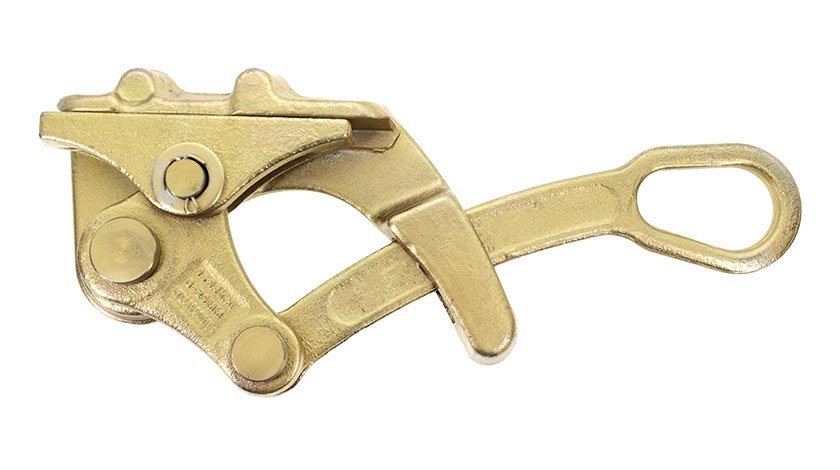 | ||||||
| Suit for | Copper Cable, Cover Cable,Bare Aluminum Cable, ACSR, ACSS, AAC, ABC, Bare Cu Cable, Guy Wire, Wire Rope, Barbed Wire, Trolley Wire | ||||||
| Code | WLL | Cable Diameter | |||||
| Unit | lbs | KN | Ton | in | mm | ||
| HM - GTA - 050 - 060 | 5000.0 | 20.0 | 2.0 | 0.2 | 0.6 | 4.5 | 15.0 |
| HM - GTA - 100 - 080 | 10000.0 | 45.0 | 4.5 | 0.3 | 0.8 | 8.0 | 20.0 |
| HM - GTA - 120 - 080 | 12000.0 | 53.3 | 5.4 | 0.7 | 1.3 | 17.8 | 31.8 |
| Picture | 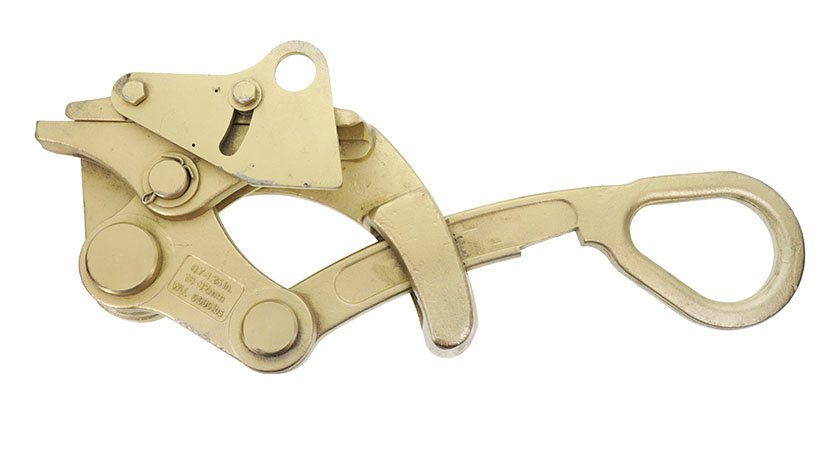 | ||||||
| Suit for | Copper Cable, Cover Cable,Bare Aluminum Cable, ACSR, ACSS, AAC, ABC, Bare Cu Cable, Guy Wire, Wire Rope, Barbed Wire, Trolley Wire | ||||||
| Code | WLL | Cable Diameter | |||||
| Unit | lbs | KN | Ton | in | mm | ||
| HM - GTB -120 - 125 | 12000 | 54 | 5.4 | 0.7 | 1.25 | 18 | 32 |
| Picture | 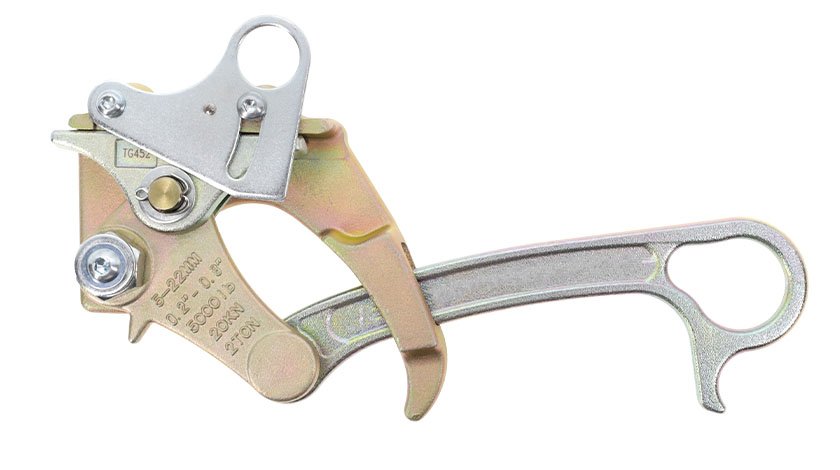 | ||||||
| Suit for | Copper Cable, Cover Cable,Bare Aluminum Cable, ACSR, ACSS, AAC, ABC, Bare Cu Cable, Guy Wire, Wire Rope, Barbed Wire, Trolley Wire | ||||||
| Code | WLL | Cable Diameter | |||||
| Unit | lbs | KN | Ton | in | mm | ||
| HM - GTC- 050 - 080 | 5000 | 20 | 2 | 0.2 | 0.8 | 5 | 22 |
| Picture | 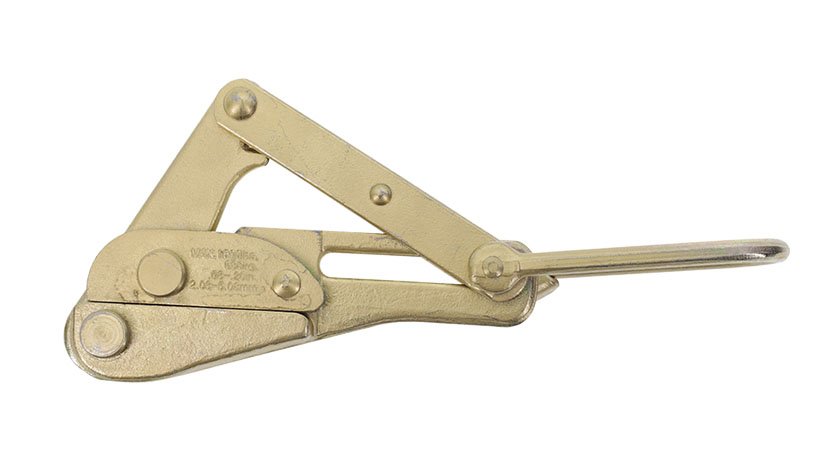 | ||||||
| Suit for | Copper Cable, Cover Cable,Bare Aluminum Cable, ACSR, ACSS, AAC, ABC, Bare Cu Cable, Guy Wire, Wire Rope, Barbed Wire, Trolley Wire | ||||||
| Code | WLL | Cable Diameter | |||||
| Unit | lbs | KN | Ton | in | mm | ||
| HM - GAA - 015 - 120 | 1500 | 6.8 | 0.68 | 0.8 | 1.2 | 2.03 | 5.08 |
| Picture | 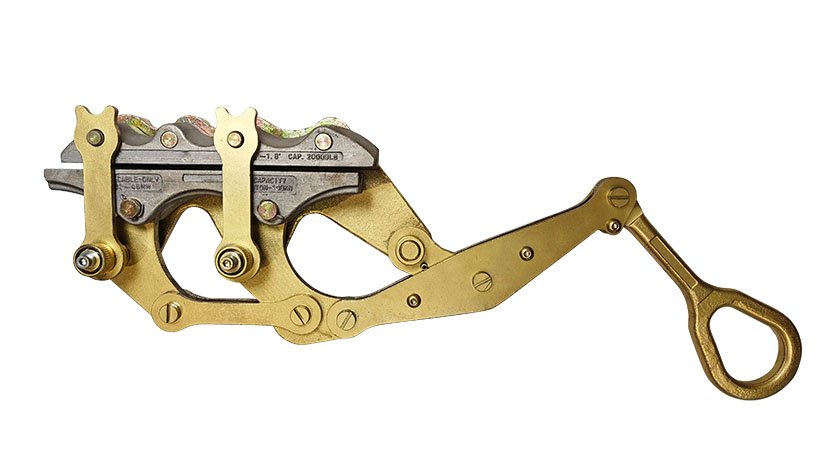 | ||||||
| Suit for | Copper Cable, Cover Cable,Bare Aluminum Cable, ACSR, ACSS, AAC, ABC, Bare Cu Cable, Guy Wire, Wire Rope, Barbed Wire, Trolley Wire | ||||||
| Code | WLL | Cable Diameter | |||||
| Unit | lbs | KN | Ton | in | mm | ||
| HM - GFB - 200 -180 | 20000 | 90.0 | 9 | 1.24 | 1.8 | 31.5 | 45.7 |
| Picture | 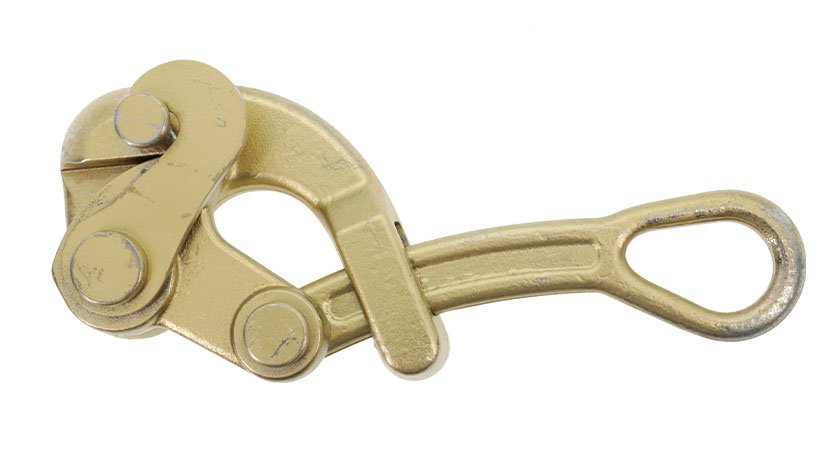 | ||||||
| Suit for | Guy Wire, Wire Rope, Barbed Wire, Trolley Wire | ||||||
| Code | WLL | Cable Diameter | |||||
| Unit | lbs | KN | Ton | in | mm | ||
| HM - GJA - 050 - 075 | 5000 | 20 | 2 | 0.28 | 0.75 | 7 | 20 |
| Picture | 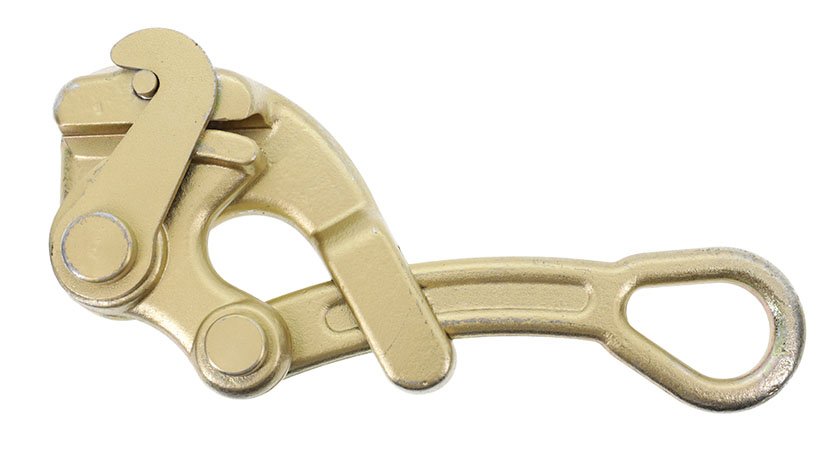 | ||||||
| Suit for | Guy Wire, Wire Rope, Barbed Wire, Trolley Wire | ||||||
| Code | WLL | Cable Diameter | |||||
| Unit | lbs | KN | Ton | in | mm | ||
| HM - GJB - 015 - 080 | 2000 | 9 | 0.9 | 0.75 | 1.25 | 1.9 | 3.2 |
| Picture | 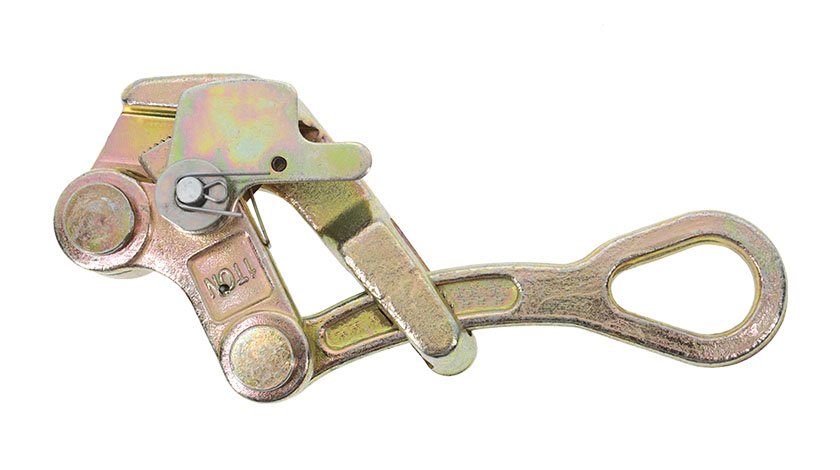 | ||||||
| Suit for | Guy Wire, Wire Rope, Barbed Wire, Trolley Wire | ||||||
| Code | WLL | Cable Diameter | |||||
| Unit | lbs | KN | Ton | in | mm | ||
| HM - GJC - 025 - 063 | 2500 | 10 | 1 | 0.1 | 0.63 | 2.5 | 16 |
| Picture | 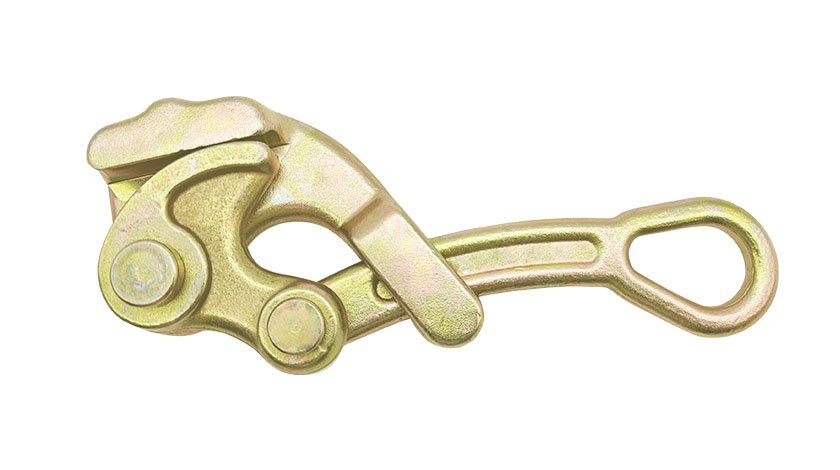 | ||||||
| Code | WLL | Cable Diameter | |||||
| lbs | KN | Ton | in | mm | |||
| HM-GJD-080-076 | 8000 | 35.6 | 3.63 | 0.28 | 0.76 | 7.1 | 19.2 |
This section brings together everything from what a wire rope come along is, how it works, to how HULK Metal achieves higher quality and stable supply. It explains structure, materials, production control, testing standards, cost logic, and supplier selection insights. For buyers, this knowledge is essential to avoid poor-quality products and unreliable suppliers. Careful reading helps you make smarter sourcing decisions and choose a more dependable cable wire gripper partner for long-term projects.
Wire Rope Come Along, also called wire grips or come along clamp, is a mechanical tool used to firmly grip and pull wires, cables, or conductors during installation, tensioning, and positioning operations. It is widely applied in power line construction, telecom projects, and infrastructure work where controlled tension is required.
A reliable cable wire gripper must maintain strong holding force without damaging the conductor surface. This depends on jaw design, material strength, and manufacturing precision. Compared with low-grade products, a well-produced wire rope come along offers more stable gripping, higher safety margins, and longer service life.
At HULK Metal, production is based on forged steel structures, combined with precision machining and strict inspection standards. Each unit is designed to handle demanding field conditions while ensuring consistent clamping performance. With OEM capability, specifications, jaw types, and load requirements can be adjusted to match different project needs, helping buyers reduce compatibility risks and improve operational efficiency.
Material selection directly affects strength, durability, and safety. Steel offers higher load capacity and wear resistance, while aluminum provides lighter weight but lower strength for specific applications.
Steel wire rope come along is the most widely used type due to its superior strength and durability. Manufactured through forging and heat treatment, it provides higher tensile capacity and better resistance to deformation under heavy loads. This makes it suitable for demanding applications such as transmission line construction and large conductor installation.
Compared with alternative materials, steel ensures more stable gripping performance and longer service life, especially under repeated use. Surface treatments like galvanizing further improve corrosion resistance, allowing the cable wire gripper to perform reliably in outdoor and harsh environments. For projects requiring consistent quality and safety margins, steel remains the preferred choice.
Aluminum wire rope come along is designed for applications where reduced weight is important. Its lighter structure makes handling easier, especially in situations requiring frequent repositioning or manual operation. However, aluminum has lower strength compared to forged steel, which limits its load capacity and durability.
While it may be suitable for light-duty tasks, it is less ideal for high-tension or heavy-load environments. For buyers focusing on long-term reliability and higher safety performance, steel models are generally a more dependable option. Currently, HULK Metal focuses on steel wire rope come along to ensure consistent product strength and operational safety.
Wire rope come along clamps are mainly classified by jaw structure, including parallel jaw and cam jaw designs, each offering different gripping mechanisms, pressure distribution, and application suitability.
Parallel jaw wire rope come along uses two flat jaws to apply even pressure across the conductor surface. This design reduces localized stress and minimizes damage to cables, making it suitable for applications where surface protection is important, such as coated or soft conductors.
Compared with cam jaw designs, parallel jaws provide more uniform gripping force and better stability during tensioning. However, they may require more precise adjustment to ensure proper clamping. For projects prioritizing conductor integrity and controlled handling, this type is often preferred.
tension rises. The cam structure bites into the conductor surface, providing strong holding power with less manual adjustment. This makes it highly efficient for quick operations and heavy-duty pulling tasks.
Compared with parallel jaws, cam jaws are easier to operate and offer faster setup, but they may cause more surface marking on softer cables. For applications requiring strong grip and operational efficiency, especially in rugged environments, cam jaw cable wire grippers are widely used.
Wire rope come along grips conductors using serrated jaws, holding firm under tension. It enables controlled pulling with winches or cranes across power, telecom, industrial, and infrastructure applications.
In power line construction, the wire rope come along is used to grip conductors such as ACSR, AAC, or aluminum cables during stringing and tensioning operations. The serrated jaws clamp firmly onto the conductor, preventing slipping even under high tension. Workers connect the cable wire gripper to a pulling system such as a winch or tensioner, allowing precise control over conductor positioning.
Compared with basic clamping tools, a well-designed wire rope come along provides more stable holding force and reduces the risk of conductor damage or sudden release. This is especially critical when installing long-span transmission lines where consistent tension must be maintained. Reliable gripping ensures smoother installation, fewer interruptions, and improved overall project efficiency, particularly in large-scale power infrastructure projects.
During telecom cable installation, the wire rope come along is applied to grip and guide communication cables while they are pulled across poles or underground routes. The serrated jaw design ensures that the cable wire gripper maintains a firm hold without slipping, even when cables are under moderate tension.
Operators typically attach the come along clamp to a pulling rope or manual winch, allowing controlled movement and positioning of the cable. Compared with manual pulling alone, this method offers better precision and reduces strain on workers. It also minimizes the risk of uneven tension, which can lead to cable sagging or misalignment. For telecom contractors, using a reliable wire rope come along helps maintain installation quality while improving speed and safety during deployment.
In industrial environments, wire rope come along tools are used for installing heavy-duty cables in factories, plants, and large equipment systems. These cables often require precise alignment and controlled tension during installation to ensure proper operation and safety. The serrated jaws of the cable wire gripper provide a strong and secure grip, allowing operators to pull cables through trays, conduits, or structural routes without slippage.
Typically, the come along clamp is connected to mechanical pulling equipment or cranes, enabling steady and controlled force application. Compared with less specialized tools, this setup reduces installation errors and improves efficiency when handling thick or rigid cables. For industrial projects, using a durable steel wire rope come along ensures consistent performance under demanding working conditions and repeated use.
In general construction and infrastructure projects, wire rope come along clamps are widely used for tensioning guy wires, positioning structural cables, and installing fencing or support خطوط. The tool grips the wire securely through its serrated jaws, allowing workers to apply tension using manual or mechanical pulling systems.
For example, when installing guy wires for poles or towers, the cable wire gripper holds the wire in place while tension is gradually increased to the required level. Compared with improvised gripping methods, this approach provides better control and reduces safety risks caused by slipping or sudden release. In construction environments where reliability and safety are critical, a high-quality wire rope come along becomes an essential tool for achieving stable and accurate results.
Galvanized surface treatment forms a protective zinc layer on the wire rope come along, improving corrosion resistance and extending service life. Compared with untreated steel, it performs better in outdoor and humid environments. This treatment helps maintain stable gripping performance and reduces maintenance frequency during long-term use.
Selecting a suitable wire rope come along is not only about price or appearance. It directly affects safety, efficiency, and cable integrity during operation. The following points help reduce risks and avoid costly mistakes when sourcing a cable wire gripper:
Parallel jaw wire rope come along is more suitable for insulated or rubber-coated cables. Its flat gripping surface distributes pressure more evenly, reducing the risk of damaging the outer layer. Compared with cam jaws, it offers better protection when surface condition matters.
Always ensure the jaw opening of the come along clamp matches the outer diameter of the wire or cable. If the range is too small, installation becomes difficult; if too large, the gripping force becomes unstable. Proper matching ensures firm clamping and safer operation.
Safe Working Load (SWL) must exceed the actual pulling force required on site. Choosing a cable wire gripper with insufficient capacity increases the risk of slipping or failure. A higher safety margin provides more reliable performance, especially in heavy-duty or continuous tensioning tasks.
In real projects, these factors are often overlooked in favor of lower pricing. However, a properly selected wire rope come along reduces downtime, prevents damage, and ensures smoother operations across the entire installation process.
Many sourcing problems come from hidden shortcuts in production, weak management, or unclear agreements. When purchasing wire rope come along, understanding these common risks helps avoid unstable quality, delayed delivery, and unnecessary losses in large-scale projects.
Low pricing is often achieved by reducing material grade, skipping heat treatment, or simplifying machining processes. For example, some suppliers use low-carbon steel instead of high-strength alloy steel, resulting in weaker structure and faster deformation under load. Others reduce galvanizing thickness, which leads to early corrosion.
An experienced factory evaluates cost based on material, process, and inspection requirements—not just price competition. To avoid this issue, buyers should request material certificates, confirm production processes such as forging instead of casting, and verify testing standards like tensile tests. A slightly higher price usually reflects more stable performance and fewer risks during use.
Some suppliers provide high-quality samples for approval but switch to lower-grade production during mass manufacturing. This often happens due to poor internal control or intentional cost reduction. Differences may appear in weight, jaw hardness, or surface treatment, which directly affects performance.
Reliable factories maintain strict consistency between samples and mass production through controlled processes and documented standards. Buyers should require sample retention, detailed specifications, and pre-shipment inspection reports. Working with a factory that has stable production management ensures that every batch matches the confirmed sample, avoiding disputes and rework.
Delivery delays usually result from weak supply chain coordination, lack of raw material planning, or overbooking orders beyond factory capacity. Some suppliers accept orders without confirming actual production capability, leading to repeated delays.
A well-managed factory plans production schedules based on confirmed capacity and raw material availability. To reduce risks, buyers should confirm lead time based on order quantity, check whether the supplier controls its own production or relies heavily on outsourcing, and evaluate past delivery performance. Stable delivery is critical for project timelines, especially in infrastructure and power line construction.
Inadequate inspection often means defects are only discovered after delivery. Some suppliers skip in-process checks and rely only on final visual inspection, which cannot detect internal issues such as insufficient strength or improper heat treatment.
Professional factories implement multiple inspection stages, including raw material verification, process control, and final testing. For wire rope come along, this may include load testing and dimensional checks. Buyers should confirm the inspection flow and request reports. A complete quality inspection system significantly reduces failure rates and ensures consistent product performance.
Short shipments can occur due to counting errors, poor packaging management, or lack of final verification. Some suppliers avoid responsibility by shifting blame to logistics or unclear contract terms, causing inconvenience and additional costs for buyers.
Experienced factories establish strict packaging and counting procedures before shipment. To avoid this issue, buyers should require clear packing lists, quantity confirmation before dispatch, and agreement on compensation terms. A responsible supplier will proactively resolve discrepancies instead of delaying or denying claims.
Some suppliers consider the transaction complete once goods are shipped, offering little or no support if problems arise. This becomes a serious issue when defects are discovered during installation or use, especially in large projects.
A reliable factory provides clear after-sales support for quality-related issues, including replacement or compensation. Buyers should confirm warranty terms, response time, and problem-handling procedures before placing orders. Strong after-sales support reflects confidence in product quality and helps reduce long-term procurement risks.
Understanding cost structure helps buyers evaluate quotations more accurately. A professional factory does not simply lower prices but optimizes every step through supply chain control, improving efficiency while maintaining stable quality and reliable delivery.
(Material + Mold + Labor + Energy + Surface Treatment + Packaging + Transportation + Value-Added Services + Others) / Quantity = Unit Cost
Material is the foundation of wire rope come along performance. Many low-cost suppliers reduce expenses by using lower-grade steel or inconsistent sourcing, which leads to unstable strength and shorter service life. At HULK Metal, material cost is optimized through long-term partnerships with stable raw material suppliers. Bulk procurement ensures consistent quality and better pricing compared with fragmented sourcing.
In addition, strict incoming inspection prevents substandard materials from entering production. By reducing defects and rework, overall cost is controlled more effectively. Instead of cutting material quality, we improve utilization rates and minimize waste during forging and machining. This approach ensures that customers receive reliable products without hidden risks, while still benefiting from competitive pricing.
Mold cost is often overlooked but directly impacts product consistency and production efficiency. Inexperienced suppliers may use low-quality molds or fail to maintain them properly, leading to dimensional variation and frequent replacements.
HULK Metal manages mold development through experienced engineering teams and standardized processes. High-quality mold materials extend service life and reduce long-term replacement costs. For OEM projects, molds are designed based on drawings or samples, ensuring precise structure and compatibility.
By optimizing mold design for production efficiency, cycle times are reduced and output becomes more stable. When production volume increases, mold cost per unit decreases significantly, allowing customers to achieve better pricing over time without compromising product accuracy or performance.
Labor cost varies significantly depending on factory management and automation level. Some suppliers rely heavily on manual operations, which increases inconsistency and slows production.
HULK Metal improves labor efficiency through process standardization and skilled workforce allocation. Each production step, from forging to assembly, follows clear operating procedures, reducing errors and improving output consistency. Experienced workers complete tasks faster with better precision, which lowers overall labor cost per unit.
Additionally, internal coordination between departments such as production, quality inspection, and logistics reduces delays and miscommunication. This integrated approach ensures smoother workflows, helping customers receive products faster while maintaining stable quality and cost control.
Energy consumption is a major factor in metal forging and heat treatment processes. Inefficient equipment or poor production planning can significantly increase energy cost.
HULK Metal uses optimized production scheduling to reduce idle machine time and improve equipment utilization. Modernized machinery and controlled heating processes help lower energy consumption per unit. Instead of running small, inefficient batches, production is organized in a way that maximizes output during each cycle.
By improving energy efficiency, overall manufacturing cost is reduced without affecting product quality. This allows customers to benefit from better pricing while still receiving wire rope come along products that meet performance and durability requirements.
Surface treatment, such as galvanizing, plays a critical role in corrosion resistance and product lifespan. Some suppliers reduce costs by applying thinner coatings or skipping proper pretreatment, leading to early rust and performance issues.
At HULK Metal, surface treatment is managed through controlled processes and reliable partners. Coating thickness and adhesion are monitored to ensure consistent protection. By maintaining stable cooperation with specialized factories, treatment quality remains consistent while costs are optimized through volume efficiency.
This approach avoids the hidden costs of product failure and replacement. Customers receive wire rope come along products that perform reliably in outdoor and harsh environments, reducing long-term maintenance and replacement expenses.
Improper packaging often leads to product damage, rust, or quantity discrepancies during transportation. Some suppliers use minimal packaging to reduce cost, which increases the risk of loss.
HULK Metal provides customizable packaging solutions based on product type and shipping method. Bulk packaging, reinforced cartons, or palletized loading can be arranged to balance protection and cost. Clear labeling and organized packing reduce handling errors and improve warehouse efficiency.
By optimizing packaging design, unnecessary material usage is avoided while ensuring product safety. This not only protects the wire rope come along during transit but also reduces overall logistics-related losses for customers.
Transportation cost depends on shipping method, distance, and logistics coordination. Poor planning can result in higher freight charges or delays.
HULK Metal’s in-house logistics team coordinates shipments efficiently, selecting suitable transport solutions based on order size and urgency. Consolidation of shipments helps reduce per-unit freight cost, especially for large orders.
Clear communication and documentation ensure smooth customs clearance and reduce unexpected delays. By managing logistics proactively, customers benefit from more predictable delivery schedules and optimized shipping costs, improving overall procurement efficiency.
Value-added services include OEM customization, technical support, inspection reports, and packaging adjustments. Some suppliers treat these as extra charges without delivering real value.
HULK Metal integrates these services into the production process. Engineering support helps optimize product design for performance and cost efficiency. Quality documentation provides transparency and confidence in product consistency.
By embedding these services into a coordinated workflow, additional costs are minimized while customer value is increased. This ensures that buyers receive not only a product but also a complete solution tailored to their application requirements.
Other costs may include quality management, administrative operations, and after-sales support. In poorly managed factories, these costs are often hidden or transferred to customers through inefficiencies.
HULK Metal controls these expenses through ISO 9001 management systems and structured internal processes. Clear responsibilities across departments reduce operational waste and improve response speed.
After-sales support is also planned as part of the service system, ensuring quick resolution of quality-related issues. By managing these indirect costs effectively, customers experience smoother cooperation, fewer disruptions, and better overall value when sourcing wire rope come along products.
Selecting the right supplier requires evaluating technical capability, production strength, and service reliability. A well-structured factory helps buyers reduce risk, ensure consistent quality, and secure long-term supply stability.
A capable technical team determines whether a supplier can truly understand your requirements. Many factories simply follow drawings without evaluating feasibility, which can lead to structural issues or performance risks. An experienced team reviews load requirements, jaw design, and material selection before production begins.
From a factory perspective, technical support should include design optimization, sample validation, and problem-solving during production. Buyers should communicate technical details early and observe how the supplier responds. Clear feedback, practical suggestions, and fast revisions usually indicate a team that can support long-term cooperation rather than just fulfill a single order.
Production capacity is not only about factory size but also about organization and consistency. Some suppliers appear large but rely heavily on outsourcing, which can create quality variation and delivery uncertainty.
A reliable factory controls key processes such as forging, machining, and assembly within its own system or closely managed partner factories. Buyers should evaluate monthly output capability, equipment condition, and order scheduling methods. Stable capacity ensures that both small and large orders can be handled without delays, which is especially important for projects with tight timelines or repeat purchasing needs.
Without a structured quality system, even good materials and equipment cannot guarantee consistent results. Some suppliers only perform final inspections, which increases the risk of hidden defects.
A factory operating under ISO 9001 standards implements inspection at multiple stages, including raw materials, in-process checks, and final testing. Buyers should confirm whether testing methods such as load verification are applied and whether records are traceable. Consistent quality management reduces failure rates and ensures that each batch of wire rope come along performs as expected in real applications.
A complete supply chain improves both cost control and delivery stability. Factories that depend on scattered suppliers often face delays or inconsistent material quality.
An integrated system includes stable raw material sourcing, specialized factories for different processes, quality inspection resources, and coordinated logistics. From a factory standpoint, this structure allows better control over every stage, reducing inefficiencies and unexpected issues. Buyers benefit from more predictable lead times, stable pricing, and fewer disruptions throughout the order cycle.
Service capability reflects how well a supplier can support you before, during, and after production. Some suppliers respond quickly before receiving orders but become slow or unclear afterward.
A structured service system includes clear communication from sales, technical coordination during production, inspection updates, and logistics tracking. Buyers should evaluate response speed, clarity of information, and willingness to solve problems. A factory with organized internal coordination can handle changes, reduce misunderstandings, and ensure smoother cooperation across the entire purchasing process.
Flexible payment and delivery terms indicate that a supplier has experience working with international clients. Limited options may create unnecessary financial or logistical constraints.
From a factory perspective, supporting different payment methods and trade terms helps match customer requirements and project conditions. Buyers should confirm whether terms can be adjusted based on order size or cooperation history. This flexibility reduces financial pressure and allows more efficient planning, especially for long-term or high-volume procurement.
Global shipping capability is essential for ensuring that products arrive on time and in good condition. Some suppliers lack experience with international logistics, leading to delays or documentation issues.
A factory with dedicated logistics coordination can arrange suitable shipping methods, prepare accurate documents, and handle customs requirements efficiently. Buyers should check whether the supplier has experience shipping to their region and how issues are handled. Strong logistics support reduces uncertainty and helps maintain project schedules without unnecessary interruptions.
Quality assurance does not end when products leave the factory. Some suppliers avoid responsibility once goods are shipped, which creates risks for buyers if problems arise later.
A reliable factory clearly defines after-sales support for quality-related issues, including replacement or compensation procedures. Buyers should confirm these terms before placing orders. From a factory standpoint, providing assurance reflects confidence in product quality and commitment to long-term cooperation, helping customers reduce risk and build trust in ongoing partnerships.
These common questions help buyers understand quality control, pricing, delivery, and service. Clear answers reduce uncertainty and support better decisions when sourcing wire rope come along from China.
A: We control quality at every step. First, we check raw materials before production. Then we inspect during forging, machining, and assembly. We also do load testing for safety. Our quality inspection center has full testing equipment. Every batch is recorded and traceable. Before shipment, we do final inspection again. This process helps reduce defects and ensures stable performance for each wire rope come along.
A: The price is not fixed because many factors affect it. These include material grade, size, tolerance, surface treatment, and order quantity. For example, larger sizes or higher strength requirements will increase cost. We have our own factory system, so we can calculate cost based on real production conditions. You can send your requirements, and we will give a clear and updated quotation quickly.
A: Price is always based on quality level. We do not reduce quality to give a low price. If the quality is the same, our price is usually more competitive. A larger order quantity helps reduce unit cost because production becomes more efficient. Stable and repeated orders also help improve pricing. If you share your long-term plan, we can suggest a better cost solution for your project.
A: MOQ depends on product details. Size, material, structure, and production complexity all affect it. Simple designs usually need lower MOQ, while complex or custom designs may need higher quantity. You can send us your 2D or 3D drawings. We will sign an NDA to protect your design. After evaluation, we will give you a clear MOQ and production suggestion.
A: Delivery time depends on order size and production plan. In most cases, it is around 30 days. If the order quantity is large, production efficiency increases, which can help control delivery time. Usually, it will not exceed 45 days. We confirm the schedule before production starts and follow it strictly. Stable planning helps avoid delays and supports your project timeline.
A: We work with reliable surface treatment factories. Options include galvanizing, powder coating, anodizing, and others. The best choice depends on material, usage environment, and product design. For wire rope come along, galvanized finish is commonly used for outdoor protection. We will review your application and suggest the most suitable solution to balance protection, durability, and cost.
A: We have supplied products to customers in more than 50 countries. These include Europe, North America, South America, Africa, and Southeast Asia. We are familiar with different shipping requirements and documents. Our logistics team helps arrange transportation and prepares export documents. This experience helps reduce risks and ensures smoother delivery to your destination.
A: We support a wide range of sizes and specifications. Standard models are available, and custom production is also possible. You can send us your drawings, including 2D or 3D files. We will sign an NDA to protect your information. Then our technical team will evaluate whether production is feasible and suggest improvements if needed.
A: We support common payment methods such as T/T and L/C. Other methods can also be discussed based on your needs. For delivery terms, we can work with FOB, CIF, and others depending on your project. Flexible terms help match your financial plan and logistics arrangement. We aim to make the transaction process clear and convenient.
A: HULK Metal is a supplier with strong factory resources. We work with specialized factories and have our own complete team. This includes technical support, procurement, production coordination, quality inspection, and international sales. This structure helps us control quality and delivery while providing full-service support to customers.
A: Yes, samples are available. We can provide existing samples or produce new ones based on your design. Sample testing helps you confirm quality, size, and performance before placing a full order. This step reduces risk and ensures that the final product meets your requirements.
A: You can get a quote in a shorter time by providing the following information at once:
1. 2D and 3D drawings of the Wire Rope Come Along. If neither is available, samples can be provided.
2. Quantity.
3. Delivery Terms.
4. Material, surface treatment, tolerance, and weight. If no 3D drawing is available, please provide the following information:
HULK Metal improves quality and cost efficiency through engineering understanding, stable supply chain, strict production control, and full inspection systems, ensuring reliable wire rope come along performance for global buyers.
Our technical team does not simply follow drawings. We first analyze your application, load requirement, cable type, and working environment. Many quality problems in the market come from misunderstanding customer needs at the beginning. By clarifying details early, we avoid redesign, rework, and unnecessary cost waste.
From a factory perspective, better understanding means fewer production errors and higher efficiency. When requirements are clear, we can choose the right structure, material, and process directly. This reduces trial production time and improves consistency. As a result, you receive a cable wire gripper that matches real working conditions without extra modification costs.
A stable supply chain is key to controlling both cost and quality. Many suppliers face delays or unstable pricing because they rely on random sourcing. We work with long-term partners for raw materials, processing, and surface treatment.
This system allows us to coordinate each step efficiently, reducing waiting time between processes. From a cost perspective, integrated supply means fewer middle stages and lower logistics waste. For buyers, this results in more stable pricing and faster production cycles, especially for repeat orders of wire rope come along products.
Raw material cost directly affects final product performance. Instead of choosing the cheapest option, we work with reliable steel suppliers under long-term agreements. This ensures stable quality and better price control at the source.
Before production starts, every batch of material is inspected for strength, composition, and consistency. This prevents defects from entering the production line and avoids later rework costs. By controlling material quality early, we improve overall efficiency and reduce hidden risks in the final cable wire gripper.
Production control is where efficiency and quality are truly defined. Many factories lose consistency because of unstandardized operations. We use clear process rules for forging, machining, and assembly.
Each step is monitored to ensure correct dimensions and structural strength. Workers follow standardized instructions to reduce variation. This structured system reduces scrap rate and improves output efficiency. As a result, production becomes more stable, and customers receive consistent wire rope come along products without unexpected deviations.
Quality inspection is not a final step—it is part of every stage. We check products during production and again before shipment. Load testing, dimension checks, and surface inspection are all included.
This multi-step system reduces the chance of defective products reaching customers. Compared with factories that only inspect at the end, this approach lowers risk and saves rework cost. It also improves confidence for buyers, especially in large infrastructure projects where safety and reliability are critical.
Proper packaging and delivery management help avoid damage and loss during transportation. Some suppliers reduce packaging cost, but this often leads to rust, deformation, or missing quantities.
We design packaging based on product weight, structure, and shipping method. Reinforced cartons or pallet systems are used when necessary. Our logistics coordination ensures correct quantity verification before shipment. This reduces disputes and helps customers receive wire rope come along products in correct condition, saving both time and replacement cost.
After-sales service is an important part of long-term cooperation. After receiving goods, customers can check quality and quantity. If any quality issue is confirmed, we provide return, replacement, or restocking support.
This system reduces procurement risk and builds trust. From a factory perspective, after-service also helps us improve production continuously based on real feedback. Instead of avoiding responsibility, we focus on solving problems quickly, which ultimately reduces total cost and strengthens long-term cooperation efficiency for both sides.
Quality control for wire rope come along at HULK Metal is a fully structured system covering every production stage. From raw materials to final shipment, each step is inspected to ensure strength, accuracy, and safety. We combine dimensional checks, functional testing, tensile verification, and quantity confirmation. This strict process reduces defects, improves consistency, and ensures every cable wire gripper meets industrial performance requirements before leaving the factory.
We measure jaw opening, body thickness, and key structural dimensions using calibrated tools. This ensures every wire rope come along matches drawings and maintains proper fit with specified cable diameters.
We apply controlled load testing up to 1.5 times SWL. This confirms the strength limit of each cable wire gripper and ensures safe performance under high-tension working conditions.
Before shipment, we perform final inspection on surface condition, assembly accuracy, and functional performance. This step ensures only qualified wire rope come along products are approved for delivery.
We carefully verify order quantity against packing lists before shipment. Each box is checked to avoid shortages or mistakes, ensuring customers receive complete and correct wire rope come along orders.
Each cable wire gripper is tested in simulated working conditions. We check gripping stability, jaw engagement, and operation smoothness to ensure safe and reliable performance during real installation work.
HULK Metal operates a fully integrated come along clamp factory system combining forging, machining, inspection, and surface treatment. Every stage is controlled in-house or through long-term partner factories. This structure improves production efficiency, reduces cost waste, and ensures stable quality. From raw steel to finished wire rope come along, each process is monitored under strict standards, helping global buyers receive consistent and reliable cable wire gripper products.
Choosing HULK Metal means working with a factory-driven system that integrates engineering, production, and supply chain control. It helps buyers improve product stability, reduce sourcing risk, and optimize total procurement cost. From raw material control to final inspection, every step is managed to ensure consistent cable wire gripper performance. This approach supports global buyers with reliable delivery, better pricing efficiency, and simplified purchasing processes.


This section presents a collection of technical articles related to wire rope come along, covering product structure, manufacturing process, material selection, surface treatment, quality control, and purchasing guidance. These articles are designed to help buyers better understand how cable wire gripper products perform in real applications and how to evaluate suppliers in China. By reading these resources, customers can gain practical knowledge that supports smarter sourcing decisions, reduces procurement risks, and improves long-term project efficiency and safety.
This section showcases different types of wire rope come along products used for various conductor and cable installation applications. Examples include parallel jaw come along clamps, cam jaw cable wire grippers, lightweight wire grips, heavy-duty conductor clamps, and guy wire pulling grips. Each type is designed for specific cable sizes, tension requirements, and working environments. By comparing these models, buyers can better understand their differences and choose a more suitable wire rope come along solution for their installation and tensioning projects.
HULK Metal supplies heavy-duty 12000 LBS Wire Grips built for electrical construction, telecom, and industrial cable pulling. Produced in a Chinese ISO 9001 factory, each clamp undergoes 1.5 times SWL tensile testing and full dimensional checks.
HULK Metal supplies 10,000 LBS Wire Grips ideal for ACSR, AAC, bare copper, and guy wire pulling. Our factory integrates hot die forging, precision machining, and galvanizing for consistent quality. ISO 9001 certification and 1.5 times SWL tensile testing ensure safety and reliability.
Our wire grips span working load limits from 1,000 to over 10,000 pounds, covering distribution, transmission, telecom, and industrial pulling operations. Each unit is forged from verified alloy steel, assembled with spring-loaded and self-locking jaw mechanisms, and finished with hot-dip galvanizing for long outdoor service life.
HULK Metal manufactures wire grips in our integrated factory—forging, CNC machining, heat treatment, hot-dip galvanizing, assembly, and tensile testing are all completed under one roof. Our range spans 2000 lbs to 7500 lbs safe working load, with parallel jaw and cam jaw configurations for ACSR, AAC, copper cable, guy wire, wire rope, and trolley wire.
Wire grips are important tools for gripping, pulling, and tensioning wire ropes, conductors, and cables in a wide range of industrial applications. HULK Metal offers cam jaw and parallel jaw wire grips for various load requirements and operating conditions. - Manufactured from alloy steel, precision-forged, with strict quality control, our wire grips offer stable holding force, improved safety, and long service life.
HULK Metal manufactures wire grips ranging from 1000 lbs to 3000 lbs working load capacity, covering cable diameters from 2 mm to over 25 mm across parallel jaw and cam-style configurations. Every model shares the same production backbone: hot die forging from traceable alloy steel, controlled heat treatment verified by batch hardness testing, hot-dip galvanizing at 65-micron minimum thickness, and proof load testing before shipment clearance.
HULK Metal supplies 12000 LBS Wire Grips for bare copper, ACSR, AAC, ABC, guy wire, and more. We run an ISO 9001 factory with hot forging, CNC machining, and galvanizing under one roof. OEM services include custom code, marking, and packaging.
The 20000 LBS Wire Grips are rugged come-along clamps designed for pulling and tensioning heavy conductors. Our OEM services cover custom jaw openings, surface finishes, and packaging. With an ISO 9001 certified factory, advanced hot die forging, and rigorous tensile testing, we deliver grips that meet exact specifications.
Wire Pulling Grip is widely used for pulling and tensioning cables, wire ropes, guy wires, and conductors during power line and utility construction. HULK Metal provides comprehensive Wire Pulling Grip OEM services backed by ISO 9001 management, advanced metal fabrication factories, strict tensile testing, flexible packaging solutions, and reliable logistics support.
Wire Rope Grip Puller is a heavy-duty tool designed for safe cable tensioning, pulling, and positioning in electrical, telecom, and industrial projects. HULK Metal provides OEM manufacturing with ISO 9001 quality control, strict tensile testing, and integrated supply chain support.
Wire Rope Come Along, also known as cable wire gripper, is designed for gripping and tensioning various conductors during line construction.
HULK Metal offers durable come along clamps engineered for high performance in overhead line construction and industrial cable installation. Each clamp provides a strong, slip-resistant grip on conductors, ensuring safe tensioning and pulling.
HULK Metal provides a wide range of wire grips designed for copper cables, aluminum conductors, guy wires, and steel ropes. Our Wire Pulling Grips are precision-forged, durable, and tested to handle demanding loads without damaging conductors.
As a Chinese manufacturer of heavy-duty Wire Rope Puller Tools, we hope to provide high-quality products to more customers around the world. To this end, we will pay more attention to the quality of the products and improve their performance while ensuring the overall quality.
We can provide steel jaw cable puller with wire diameter ranging from 2.03mm to 45.7mm and from 0.68 tons to 9 tons. Contact us to get the best price.
We can currently produce a variety of high-performance alloy steels that can be used for wire diameters between 0.08~1.8in (2.03~45.7mm), tensions between 1500~20000lbs (0.68~9tons) and for various wire types of Jaw Cable Gripper.
Steel Wire Rope Gripper is made of high-performance alloy steel by hot die forging. It has a variety of styles to suit more wires.
HULK Metal offers a versatile range of Jaw Grip Puller for Aluminum Cable models, from lightweight wire grip pullers to heavy-duty cable pulling tools. With OEM customization, advanced production lines, and stringent quality controls, we ensure performance, durability, and after-sale support.
ABC Conductor Grips are special tools designed for ABC wire pulling, tightening and other working environments. Its clamp can better protect the ABC when pulling. We offer a variety of ABC Conductor Grips. Contact us for better prices.
The Jaw Rope Puller is designed for tensioning and routing ropes, cables, wire ropes, etc. We can currently provide Jaw Rope Pullers with clamping wire diameters ranging from 1.9mm to 45.7mm and pulling forces ranging from 1500 to 20000LBS.
Jaw Wire Puller orders will undergo strict sampling inspections before leaving the factory to ensure that the order qualification rate can reach 99.99%. We provide QA services. You can purchase with confidence.
Guy wire jaw grip puller is a tool designed to clamp wires and provide a fulcrum for tensioning them. It is simple to operate and can protect the wires while providing a stronger clamping force. We are a Chinese factory and can provide products with higher cost performance.